Follow us :


Follow us :
By admin 02 Dec 2025
Lithium batteries are the root of modern energy storage for any technological thing, which includes smartphones, electric vehicles (EVs), and large-scale solar + BESS systems. Lithium-ion is named for its active materials; the words are either written in full or shortened by their chemical symbols. A series of letters and numbers strung together can be hard to remember and even harder to pronounce, and battery chemistries are also identified in abbreviated letters.
But always remember not all the lithium batteries are the same. Each provides its own strength, which includes its own strength, weakness, safety levels, lifespan, and ideal applications.
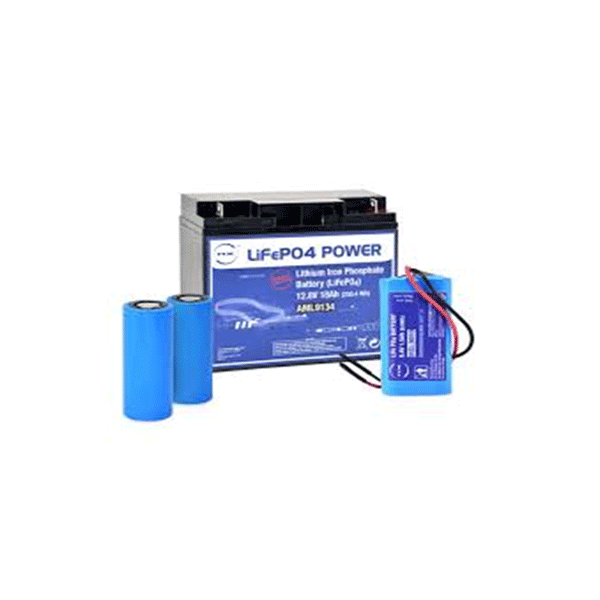
It also provides excellent durability, doesn’t overheat easily, and is best for high- temperature regions. So we can say that lithium iron phosphate is heavier and bulkier due to lower energy density.
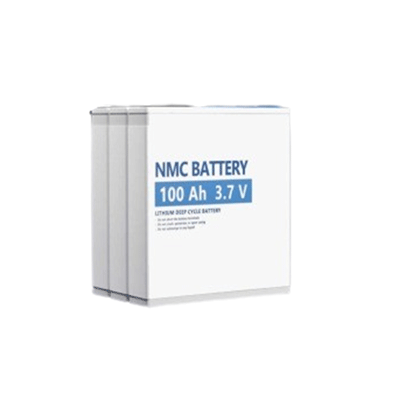
One of the most successful Li-ion systems is a cathode combination of nickel-manganese-cobalt (NMC). Similar to Li-manganese, these systems can be tailored to serve as Energy Cells or Power Cells. The secret of NMC lies in combining nickel and manganese. An analogy of this is table salt in which the main ingredients, sodium and chloride, are toxic on their own but mixing them serves as seasoning salt and food preserver.
It provides high energy storage capacity as well as more power in a smaller size.
So we can say that Nickel Manganese Cobalt provides a shorter cycle life compared to LFP and slightly lower thermal stability.
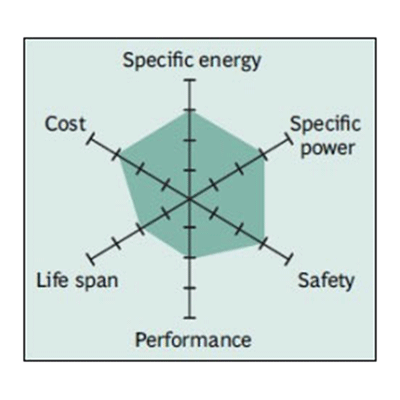
Li-cobalt is a common material for digital cameras, laptops, and cell phones because of its high specific energy. A graphite carbon anode and a cobalt oxide cathode make up the battery.Lithium ions travel from the anode to the cathode during discharge, and the cathode has a layered structure.
It is primarily utilized in small devices such as laptops, cameras, and mobile phones, and it offers a very high energy density. It provides good compaction and is lightweight. Because it contains cobalt, it is costly, less safe than LFP, and unsuitable for EVs and ESS.
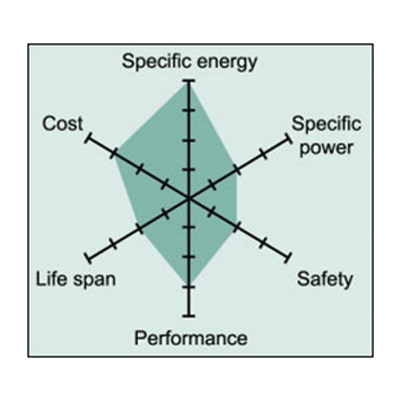
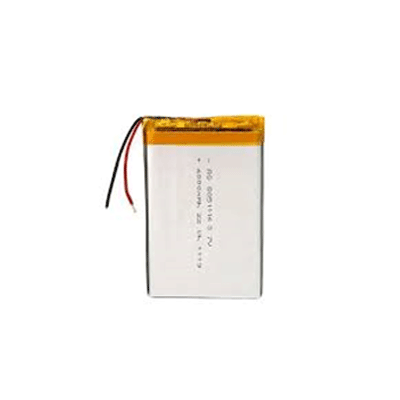
Batteries with lithium titan ate anodes have been known since the 1980s. Li-titan ate replaces the graphite in the anode of a typical lithium-ion battery and the material forms into a spinel structure. The cathode can be lithium manganese oxide or NMC.
Its key features include the fastest charging battery among all types as well as an extremely long cycle life (10,000+ cycles), which is safe and stable. It is best for grid-level storage, rapid charging systems, and military and aerospace applications.
It provides ultra-fast charging, which can be useful for the last 15–20 years, and works very well in extreme temperatures.
It is also expensive and gives energy density.
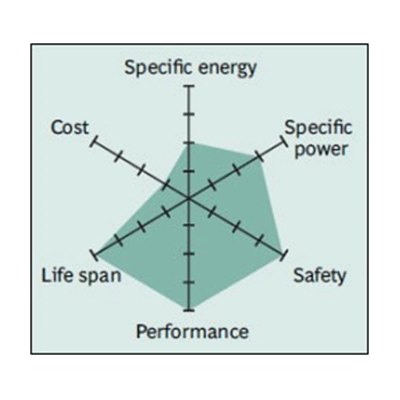
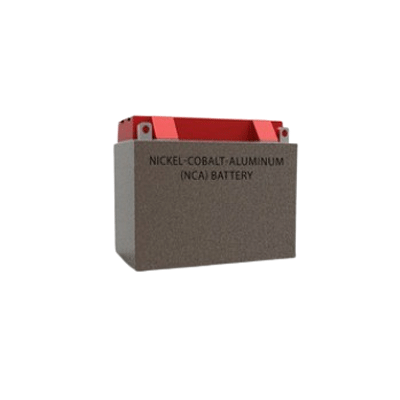
Lithium nickel cobalt aluminium oxide battery, or NCA, has been around since 1999 for special applications. It shares similarities with NMC by offering high specific energy, reasonably good specific power and a long life span. Less flattering are safety and cost.
Its key features include very high energy density and strong performance, which are preferred for long-range EVs. It is best for Tesla vehicles and high-energy EV applications. It also provides excellent power output and is lightweight and efficient. It provides a lower lifespan than LFP and also safely requires better battery management for long use.
Lithium batteries power makes our daily life easy and safe, which also provides density, cost, and lifespan. LFP is now becoming the most important thing for solar and EV applications due to its long life and great stability. As we know that NMC and NCA dominate EVs while LTO serves high-end
Our daily lives are powered by lithium batteries, and the best kind depends on factors like lifespan, cost, energy density, and safety. Because of its stability and long lifespan, LFP is increasingly being used in solar and electric vehicle applications. EVs are dominated by NMC and NCA, while high-end rapid charging industries are served by LTO.