



Introduction
Power is essential in today's fast moving industrial and commercial environments and it cannot be interrupted. Whether you’re a data center, hospital, manufacturing plant or telecom facility, a power interruption of any length may disrupt operations and cause expensive downtime. A UPS ( Uninterruptible Power Supply ) will give you immediate backup when the power goes out . A UPS is only as good as the battery bank backing it up .
High voltage Li-ion battery racks are the ideal solution for contemporary UPS technologies since they work more efficiently, last longer, charge faster, and are more dependable than standard lead-acid batteries.
By admin 05 August 2026
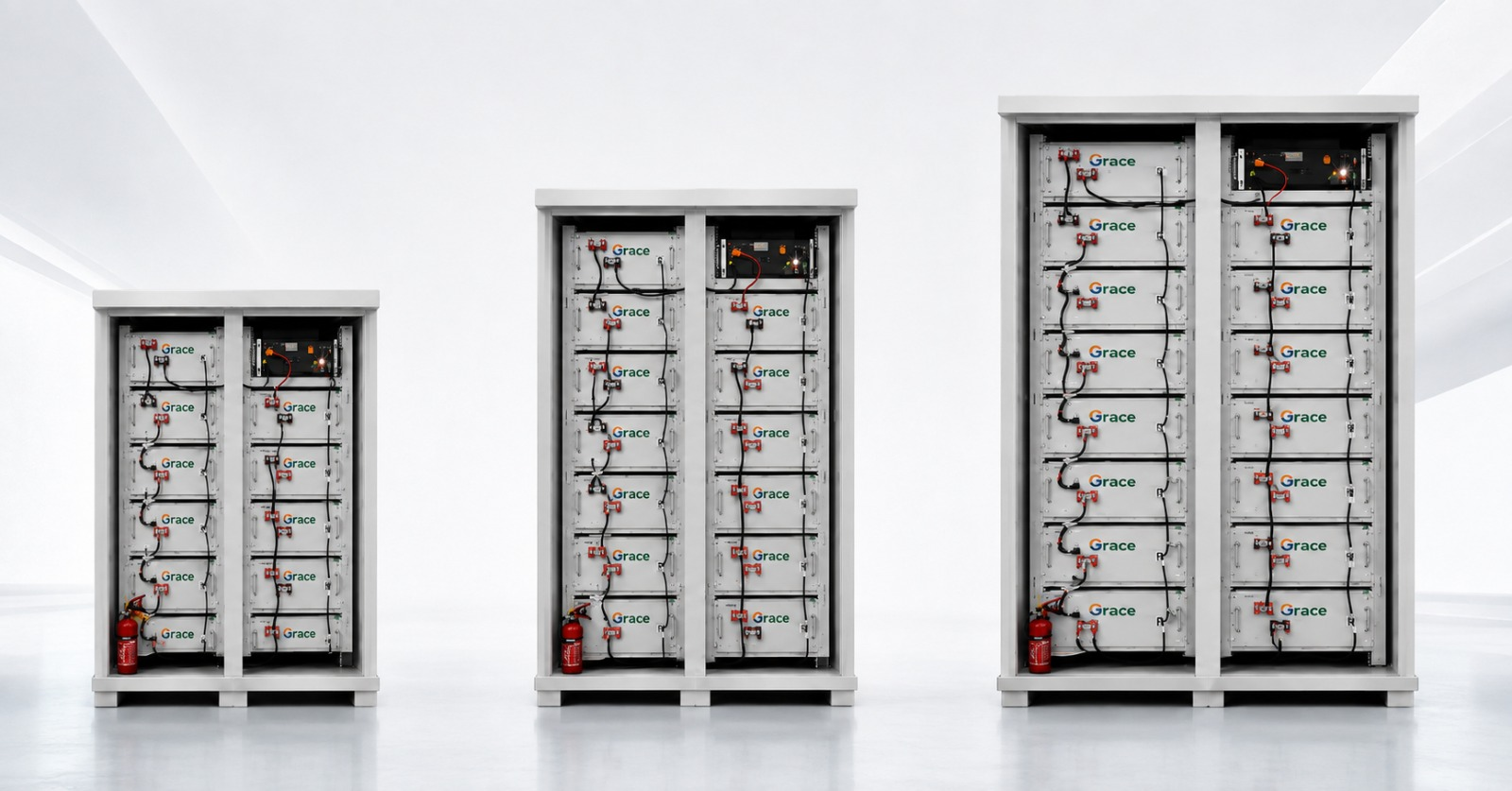
What is a High Voltage Battery Rack?
A High Voltage Battery Rack is a modular lithium-ion battery system that combines multiple battery modules to provide high DC voltage for UPS applications. The racks are equipped with an intelligent Battery Management System (BMS) that provide safe, reliable and efficient power backup for critical operation.
How High Voltage Battery Racks Improve UPS Performance
1. Immediate Back-up Power During Power Outages
When the grid fails , high voltage lithium-ion batteries are immediately responsive , allowing the UPS to provide uninterrupted power to critical equipment without any perceivable interruption .
2. Increased Energy Density
More compact and energy dense lithium-ion batteries are the ideal solution for applications where installation space is limited but longer backup time is required.
3. Quicker Charging
Lithium-ion battery racks charge much faster than lead-acid batteries, so the UPS is ready for the next power interruption in no time.
4. Extended Lifespan
High-voltage lithium-ion batteries can be built to endure for many charge-discharge cycles, thus increasing their lifetime and reducing the costs of battery replacement.
5. Intelligent Battery Management System
An intelligent BMS continuously monitors voltage, temperature, current, and battery condition to manage the battery effectively and safely, preventing overheating, overcharging, and short circuits.
6. Improved Efficiency
Operating at higher voltage reduces the current flow, thus decreasing energy losses, heat generation and improving the overall efficiency of the UPS system.
7. Modular and Scalable Architecture
More battery racks can be added to increase reserve capacity if necessary, making it easy to adapt to future needs.
8. Low Maintenance
Traditional lead-acid batteries are not comparable to lithium-ion battery racks which require very little maintenance, allowing businesses to reduce operating costs and improve system uptime.
Applications
High Voltage Lithium-ion Battery Racks are widely used in:
- Data Centers
- Hospitals
- Manufacturing Industries
- Commercial Buildings
- Telecom Infrastructure
- Banking & Financial Institutions
- IT Facilities
These industries rely on uninterrupted power to ensure continuous operations and protect critical equipment.
Lithium-ion vs Lead-Acid Batteries
| Feature | Lead-Acid | High Voltage Lithium-ion |
|---|---|---|
| Service Life | 3–5 Years | 10–15 Years |
| Charging Time | Slow | Fast |
| Maintenance | High | Minimal |
| Energy Density | Low | High |
| Efficiency | Moderate | High |
Conclusion:
High Voltage Lithium-ion Battery Racks are revolutionizing the UPS market and provide more responsiveness, greater efficiency, longer service life and lower maintenance requirements. Due to their innovative design, modular architecture and advanced safety mechanisms, these racks are perfect for companies that require a dependable source of energy with no interruptions. In an age when more industries are upgrading their technologies, purchasing a high voltage lithium-ion battery rack is a good choice for enhancing UPS service, reducing operational expenses and ensuring business continuation.
